
Something massive just happened, and most brands haven’t realized it yet.
OpenAI’s ChatGPT Atlas browser has quietly redefined how people search, and, in the process, how brands will be found.
Atlas isn’t just another search engine. It’s a thinking engine, one that reads, reasons, and remembers. It doesn’t show you ten blue links. It gives you a synthesized answer, drawn from a curated set of trusted sources.
In other words, Atlas doesn’t just index the web. It interprets it.
And that means the traditional SEO playbook, built around keywords, backlinks, and SERP rankings, is officially obsolete.
To win visibility in this new AI-first world, we need a new strategy for a new kind of search.
Here are the five shifts every brand must make to stay relevant in the age of Atlas.
From Page One Rankings to AI-Powered Answers
In Atlas, there is no Page One. No second page either.
The search journey begins and ends with a single synthesized response, an instant conversation powered by generative AI. If your brand isn’t cited in that answer, it’s invisible.
This is the new frontier: AI citations.
Just as websites once optimized for Google rankings, brands now need to optimize for inclusion in AI-generated answers, a discipline now being called Generative Engine Optimization (GEO).
It’s no longer about being found by users, it’s about being trusted by the AI that speaks to them.
Think of it this way: in the Atlas world, “as seen in the AI’s answer” replaces “as seen on Page One.”
2. Atlas Doesn’t Search for Keywords, It Searches for Meaning
Traditional SEO revolved around matching keywords. Atlas doesn’t care about that.
Its model interprets intent and context, pulling insights from content that best answers a question, even if the exact words don’t match.
In fact, a recent analysis of Google’s AI Overviews found that 84% of AI-generated answers didn’t include the user’s exact query words.
This shift means the new optimization frontier is semantic depth, content that captures the why and how behind a topic, not just the what.
To get Atlas to cite you, your brand needs to demonstrate topical authority: comprehensive, interlinked content hubs that cover entire subjects with depth and clarity.
Because Atlas doesn’t look for keywords.
It looks for understanding.
3. Authority Is the New Algorithm
When Atlas pulls answers from the web, it doesn’t treat all sources equally.
It’s not democratic, it’s discerning.
AI systems are built to prefer trusted, authoritative brands. In early analyses, high-authority sites like Investopedia and WebMD are cited far more often than smaller or newer domains, even when those lesser-known sites rank higher in organic search.
Why? Because credibility acts as a safety filter.
Atlas, like any generative AI, is designed to minimize misinformation risk.
That’s why E-E-A-T (Experience, Expertise, Authoritativeness, Trustworthiness) isn’t just a Google framework anymore, it’s the backbone of AI-driven visibility.
To make your brand “Atlas-ready,” start reinforcing your credibility signals:
- Add expert bylines and verifiable credentials.
- Structure your pages clearly for readability and trust.
- Earn backlinks from authoritative domains.
- Keep your data accurate and up-to-date.
In the eyes of AI, trust is the ultimate ranking signal.
Not feeling like reading? Listen about this topic in Podcast.
4. Memory Is the New Retargeting
Here’s the part that changes everything.
Atlas doesn’t just answer questions, it remembers.
It has persistent memory, which means it can recall the sites and sources a user interacts with and bring that context back in future sessions.
If Atlas cites your brand once and the user engages with it, your content could live in that user’s personal AI memory. So the next time they ask a related question, your brand could resurface automatically, not because you bought an ad, but because the AI remembers your value.
Think of it as AI-native brand familiarity.
Getting cited once is no longer a one-time win, it’s an entry into the user’s digital subconscious.
Your goal: become the brand Atlas remembers.
5. Tracking in a World of Invisible Conversions
There’s a hidden cost to this evolution: data opacity.
When Atlas (or any AI agent) acts on behalf of a user, visiting sites, filling out forms, booking demos, those visits often show up in analytics as “direct traffic”.
No referrer. No UTM tag. No trace of where the conversion actually came from.
That’s because the user isn’t a human browser session, it’s an AI agent executing instructions.
Traditional metrics like “time on page” or “source medium” start to break down when the visitor is a bot working for a human.
To adapt, marketers will need to rethink attribution models entirely, using server-side analytics, AI user-agent detection, and custom tagging to track what’s really happening.
Because in the Atlas era, visibility is measurable, but not in the ways we’re used to.
The Atlas Era Demands a New Kind of SEO
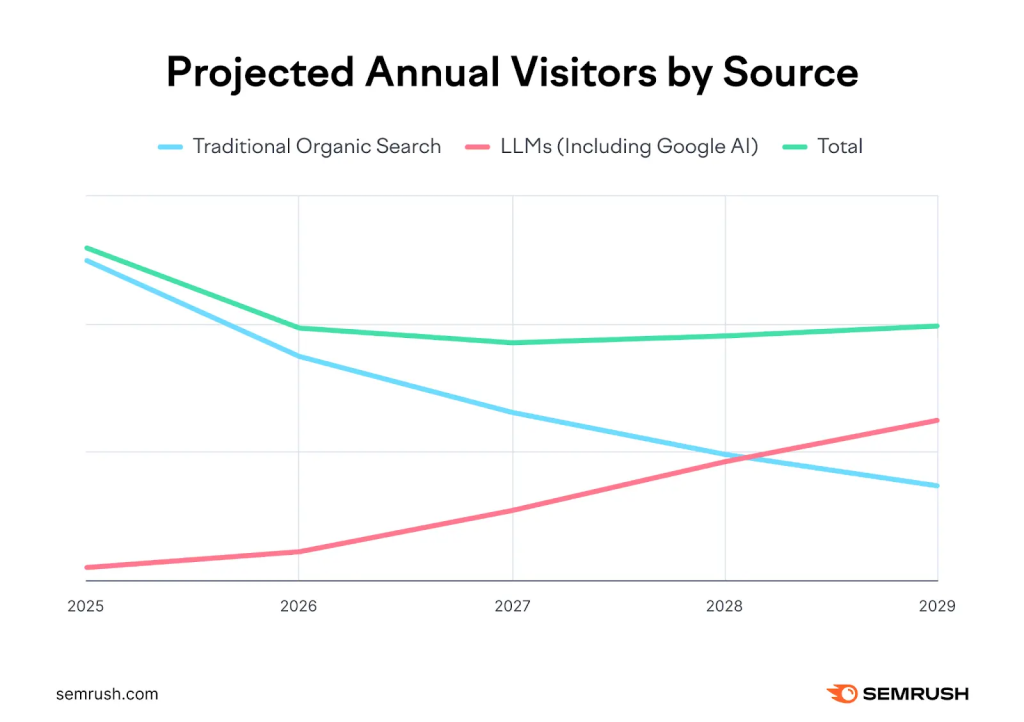
Atlas marks the dawn of AI-mediated discovery. The way people find and trust information will never be the same again.
Brands that win in this world will be those that:
- Create deeply contextual, semantically rich content.
- Build reputations AI can recognize and rely on.
- Understand how AI memory shapes brand familiarity.
- Redefine measurement for a world of invisible agents.
The question for marketers isn’t “How do we rank?” anymore.
It’s “How do we get remembered by the AI that everyone is now asking?”
The old SEO playbook is gone. Atlas just wrote the new one.
At Kreativ Street, We’re Already Building for the Atlas Era
At Kreativ Street, we’ve been helping ambitious brands evolve beyond traditional SEO, designing content ecosystems, authority frameworks, and AI-ready strategies that ensure your brand isn’t just found, but remembered in this new search landscape.
We combine deep storytelling with technical precision, so your brand earns trust not just with people, but with the AIs shaping what people see next.
Because in the age of Atlas it is engineered. And we’re here to help you build it.
FAQs
Atlas is OpenAI’s AI-powered browser that doesn’t just show results, it thinks with you. It reads, summarizes, and remembers context, turning the search journey into a conversation rather than a list of links.
From our lens at Kreativ Street, this changes SEO in three big ways:
The goal shifts from ranking to being cited, if Atlas uses your content in its answer, that’s the new No.1 spot.
Structure and clarity become non-negotiable. AI doesn’t “browse” like a human, it interprets. Schema, clean markup, and fact-rich content help it “understand” you.
Visibility becomes more personal, Atlas remembers context, meaning brand consistency and depth of content start to matter as much as keywords.
SEO now lives at the intersection of trust, clarity, and usability by AI, and that’s where brands must play.
GEO is the evolution of SEO for AI-first search. Instead of optimizing for Google’s crawler, you optimize for AI comprehension.
At Kreativ Street, we see GEO as optimizing your brand to be part of AI-generated answers. That means:
Writing for how people ask questions, not just what they search.
Using clear entities, structured data, and natural language.
Building factual, source-rich content the AI can trust.
In short, GEO isn’t about chasing traffic, it’s about earning inclusion in the new AI information loop.
Getting cited in Atlas answers is the new holy grail. To make that happen:
Be credible – clear authorship, factual accuracy, and trusted sources.
Use schema – define your organization, articles, and FAQs for AI readability.
Write like users talk – conversational queries win over keyword stuffing.
Earn mentions in high-authority spaces – media, research, or expert roundups.
Keep content fresh – AI loves up-to-date, complete information.
At Kreativ Street, we build “AI-ready” content ecosystems, ensuring your brand is the source the algorithm cites, not just another indexed page.
In AI search, authority beats backlinks. Atlas and similar engines look for trust, accuracy, and consistency, not just link volume.
Backlinks helped search engines “vote” for your content. But AI doesn’t vote, it validates. It checks who you are, how credible your information is, and how consistently you’re referenced across the web.
So instead of chasing links, we at Kreativ Street focus on building your entity authority, verified mentions, strong author profiles, and thought-leadership content that AIs can trust.
Atlas’ memory feature changes visibility from momentary to persistent. The browser remembers what users interact with, meaning brand impressions compound over time.
Here’s what that means for growth brands:
Context builds loyalty – if someone engages with your content once, Atlas may resurface you again.
Visibility becomes cumulative – consistent mentions create AI “brand familiarity.”
Depth wins – brands with rich, interconnected content ecosystems stay top-of-mind.
At Kreativ Street, we’re now optimizing not just for search results, but for AI recall, ensuring your brand becomes part of a user’s long-term digital memory.
